When you're importing LED strips from China, the difference between a successful project and a costly mistake often comes down to a few technical details most buyers don't know to check.
After 17 years of serving clients across 40+ countries — from signage shops in Dubai to distributors in Brazil — we've seen the same mistakes repeat themselves over and over.
Here are the 5 most common ones. And more importantly, how to avoid them every time.
What This Guide Covers
- Voltage Drop Miscalculation
- Batch Color Inconsistency
- Waterproof Rating Misunderstanding
- Adhesive Failure on Metal and Glass
- Power Supply Mismatch
- How to Choose a Reliable LED Strip Supplier
- FAQ
1. Voltage Drop Miscalculation
What It Is
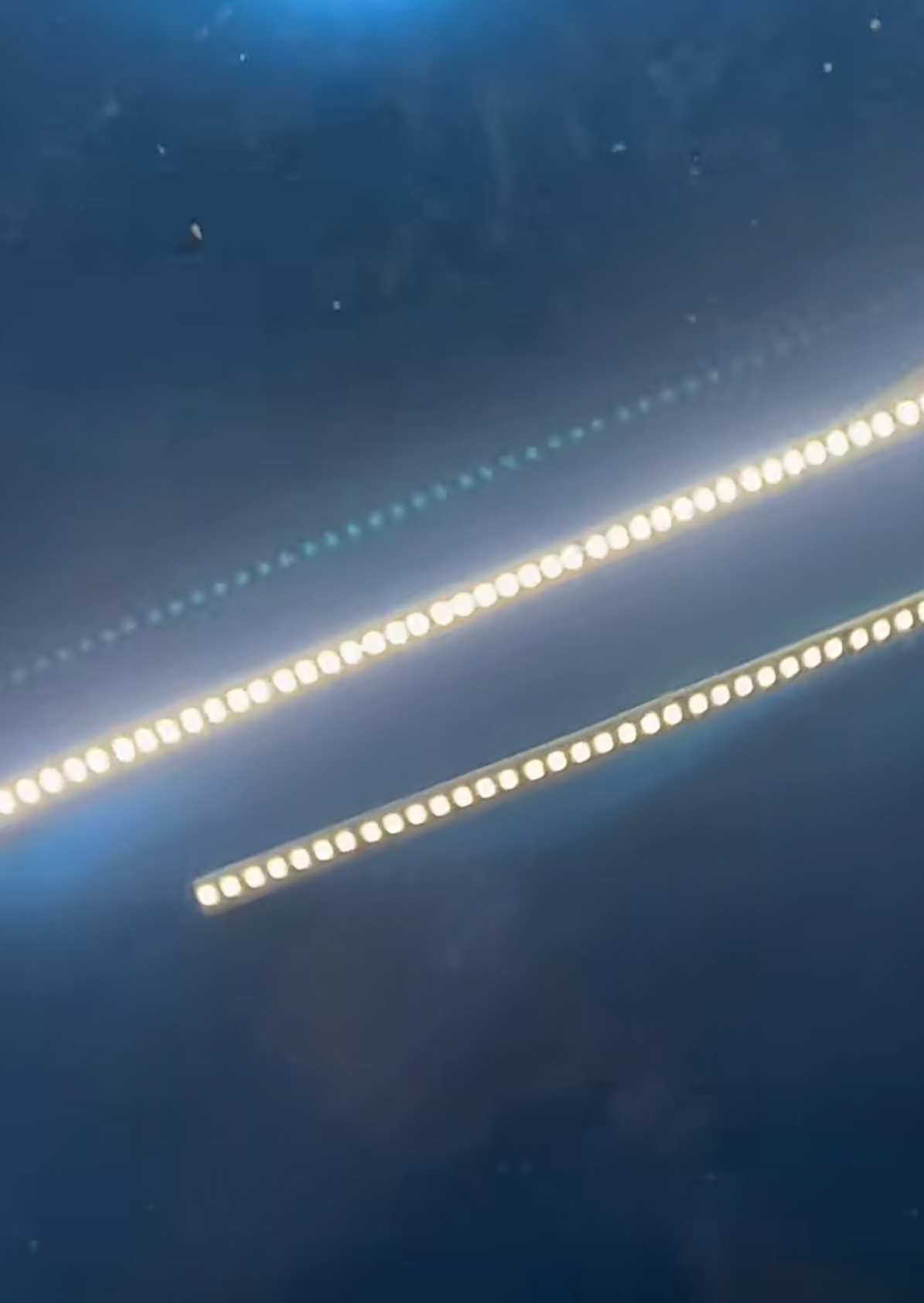
Voltage drop (also called sag) happens when the electrical current loses strength as it travels along the LED strip. The farther the strip runs from the power source, the dimmer the LEDs become.
What It Looks Like in Practice
- The first 2 meters of your LED strip looks bright and even
- After 5-6 meters, the strip is noticeably dimmer
- The end of a long single-ended run may be 30-50% darker than the start
Why It Happens
LED strips operate on low voltage (12V, 24V, etc.). Over longer distances without midpoint power injection, the voltage drops below what the LEDs need to maintain full brightness.
Industry Standards for Max Single-Feed Length
| Voltage | Max Single-Ended Feed (Without Midpoint Injection) |
|---|---|
| 12V | 5 meters |
| 24V | 8-10 meters |
| 36V | 12-15 meters |
| 48V | 15-20 meters |
How to Check Your Supplier
Ask your supplier this question directly:
"What is the maximum single-feed length for this LED strip model? What happens if I need to run it longer?"
A reliable supplier should be able to give you a specific number and explain the wiring solution.
Red flag: If they say "you can run it as long as you want" or can't give you a specific number, that's a sign they haven't thought through the engineering.
How We Handle It
Before every order ships, our team confirms the max single-feed length based on your voltage choice (12V / 24V / 36V / 48V / 110V / 220V) and provides a wiring diagram if midpoint power injection is needed.
2. Batch Color Inconsistency
What It Is
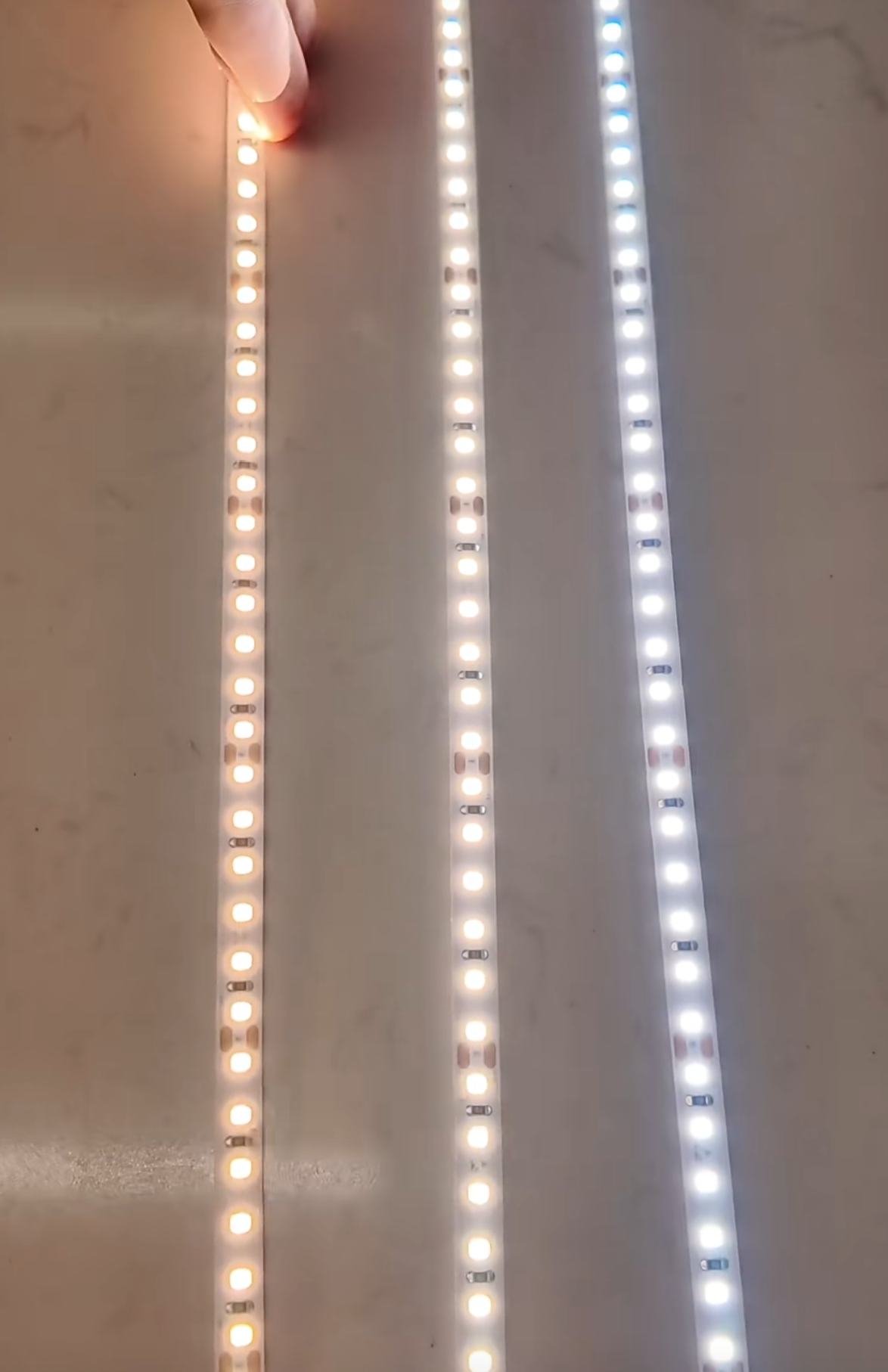
You place an order. The first batch arrives and looks perfect. You reorder three months later — and the color is noticeably different. Same product. Same supplier. Different result.
Why It Happens
LED chips are sorted into bins (called Bins) based on their exact color temperature. Different production batches from different bins will show visible color variation — even if both are labeled "warm white."
How It Affects Your Project
- Visible color difference between panels in the same installation
- Projects look uneven and unprofessional
- Clients blame the installer, not the supplier
- Reorder hesitation and trust damage
How to Check Your Supplier
Ask these two questions:
"Are all LED chips in my order from the same production batch and Bin?"
"Can you provide a bin report for this order?"
Red flag: If the supplier says "color is based on mass production, we cannot guarantee exact match" — they're telling you they mix bins.
How We Handle It
For large orders, we lock chips to the same Bin from a single production run. Every shipment for large orders includes a spectrophotometer bin report so you can verify the color consistency.
3. Waterproof Rating Misunderstanding
What It Is
IP65 and IP67 sound similar but perform very differently. Buyers who don't understand the difference often specify the wrong rating — and pay too much, or face failures in the field.
IP Rating Breakdown
| Rating | Protection Level | What It Handles | Best For |
|---|---|---|---|
| IP20 | No protection | Dust only | Indoor, dry environments |
| IP65 | Water splash resistant | Water spray from any direction | Covered outdoor, indoor signage |
| IP67 | Short-term immersion | Water immersion up to 30 minutes | Areas with occasional water exposure |
| IP68 | Continuous immersion | Sustained underwater use | Outdoor buried or submerged applications |
How to Check Your Supplier
The most important question:
"Can you provide a third-party test report for the IP rating? Which laboratory conducted the test?"
Red flag: Factory self-issued certificates are not the same as independent third-party lab reports. Many factories issue their own "IP65 certificates" that have never been tested.
How We Handle It
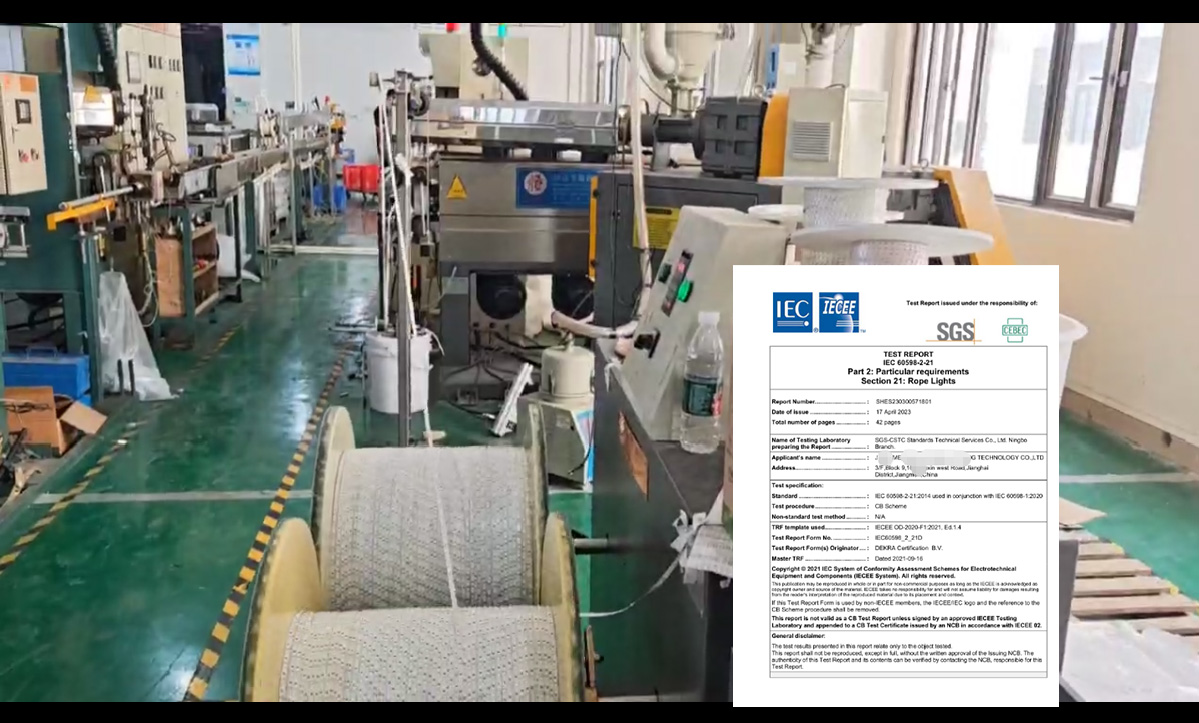
All our waterproof LED strips are tested by SGS, a globally recognized third-party testing organization. IP test reports are available for review before you place your bulk order — not just on request after you've already committed.
4. Adhesive Failure on Metal and Glass
What It Is
The LED strip looks fine when installed. Three months later, strips are peeling off the surface, sometimes taking paint or finish with them. In signage applications, this can damage expensive cabinetry.
Why It Happens
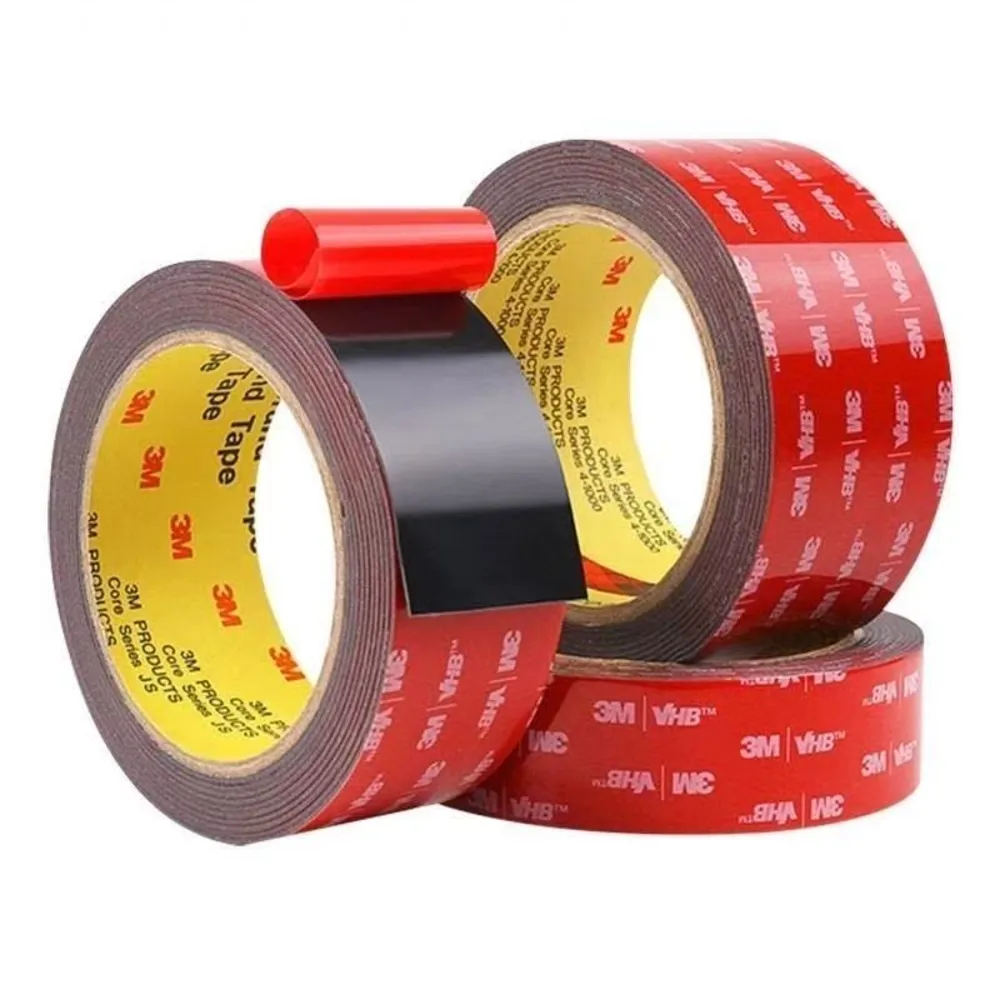
Three words: cheap adhesive. UV-sensitive adhesive breaks down under sunlight exposure. Temperature cycles cause expansion and contraction that weakens the bond. Fake 3M tape is extremely common in the market.
How to Test Before You Buy
Here's a practical test you can do with any sample:
- Apply the strip to a metal or glass surface
- Press firmly across the entire surface
- Place in an oven at 70°C for 2 hours
- Remove and let cool to room temperature
- Check: Authentic 3M VHB holds firm. Cheap adhesive bubbles, lifts, or detaches.
How We Handle It
Our standard adhesive is 3M VHB 9495 genuine tape — or equivalent premium thick adhesive for equivalent applications. Material certificates are available for every batch, so you can verify before installation.
5. Power Supply Mismatch
What It Is
The LED strip burns out. The supplier says it's the power supply. The customer is left holding the problem.
Why It Happens
Most people size a power supply based on the LED strip's rated wattage. But LED strips have inrush current — a surge of power at startup that can be 3-5x the rated wattage.
A power supply rated at 1:1 wattage ratio won't handle this surge. It will fail — and so will your strip.
The Correct Sizing Formula
Power supply wattage = (LED strip total watts) × 1.3 minimum
Recommended: × 1.5 for safety margin
Example: If your project uses 100 meters of 24V 60LED/m strip (14.4W/m):
- Total wattage = 1,440W
- Minimum power supply = 1,440 × 1.3 = 1,872W
How to Check Your Supplier
Ask your supplier:
"What power supply wattage do you recommend for my project, and why is that the right size?"
The correct answer should include the 1.3x multiplier — not 1:1.
Red flag: If they recommend a power supply at exactly the same wattage as your strip load, they haven't accounted for inrush current.
How We Handle It
Every order we process includes power supply sizing based on your actual project specifications. We also offer our own branded power supplies that have been tested and matched to our LED strip lines — so you don't have to guess.
How to Choose a Reliable LED Strip Supplier
Based on these 5 common mistakes, here's a checklist of questions you should ask every LED strip supplier before placing an order:
Questions to Ask Your Supplier
- What is the maximum single-feed length for this strip? Can you show me the calculation?
- Are all chips from the same production batch and Bin? Can you provide a bin report?
- Do you have third-party IP rating test reports (SGS or equivalent)?
- What adhesive do you use? Can you provide the 3M authorization certificate?
- What power supply wattage do you recommend and why? Does it account for inrush current?
- Do you confirm these technical parameters with every buyer before production?
- Can I get a sample to verify before placing a bulk order?
What a Reliable Supplier Looks Like
A reliable supplier will:
- ✅ Answer every technical question with specific numbers
- ✅ Provide third-party test reports without hesitation
- ✅ Confirm parameters with you before production starts
- ✅ Offer samples before bulk orders
- ✅ Stand behind their product with a clear warranty policy
FAQ
Q: What is the most common LED strip quality issue?
A: Voltage drop and batch color inconsistency are the two issues we see most frequently in new client conversations. Both are preventable with proper pre-order communication.
Q: How do I check LED strip quality before buying?
A: Order samples first. Test them in your actual installation environment. Check the adhesive bond, color consistency, and brightness at the end of the run.
Q: What voltage is best for LED strip signage?
A: 24V is the industry standard for most signage applications. It offers a good balance between brightness consistency and installation flexibility. 12V is suitable for shorter runs under 5 meters.
Q: Does CE certification guarantee LED strip quality?
A: CE is a self-declaration of conformity — not a guarantee of quality. Always ask for third-party test reports from recognized laboratories like SGS or TÜV.
Q: How do I prevent LED strip from falling off?
A: Use LED strips with genuine 3M VHB adhesive. Ensure the mounting surface is clean, dry, and free of dust or oil before installation. For outdoor applications in hot climates, use silicone mounting clips in addition to adhesive.
Ready to Work with a Supplier Who Gets It Right?
If you're planning a signage, lighting, or display project and want to work with a supplier who confirms every technical detail before production — we're here to help.
We work with distributors, importers, and signage shops across 40+ countries. Free samples available. Free technical consultation.
Contact Us → | Request a Sample → | Browse LED Strip Products →
This article was last updated April 2026. For the most current product specifications and availability, please contact our sales team directly.