When choosing between SMD (Surface Mount Device) strip lights and COB (Chip on Board) strip lights, distributors need to consider multiple factors such as performance, application scenarios, cost, and long-term benefits. Below is a professional analysis and a comparison chart to guide distributors in making informed decisions.
Key Considerations for Selection
Light Quality and Uniformity
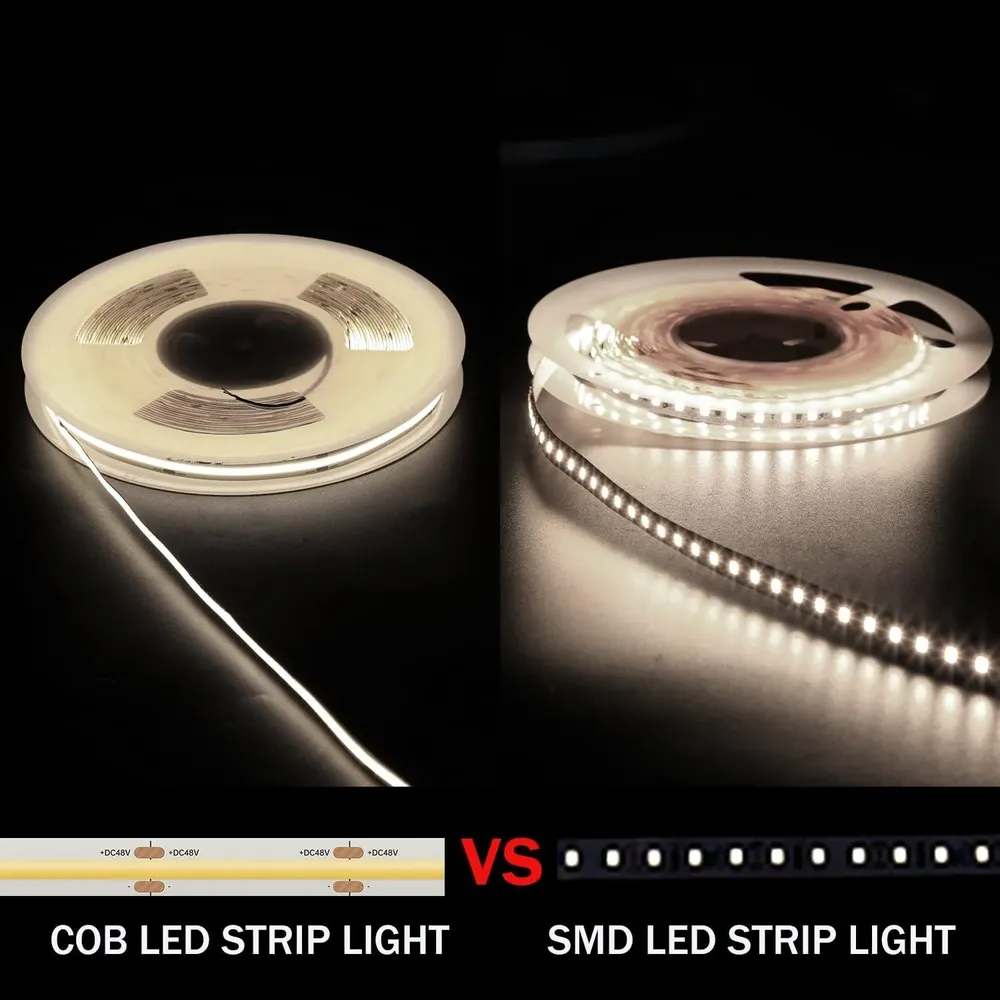
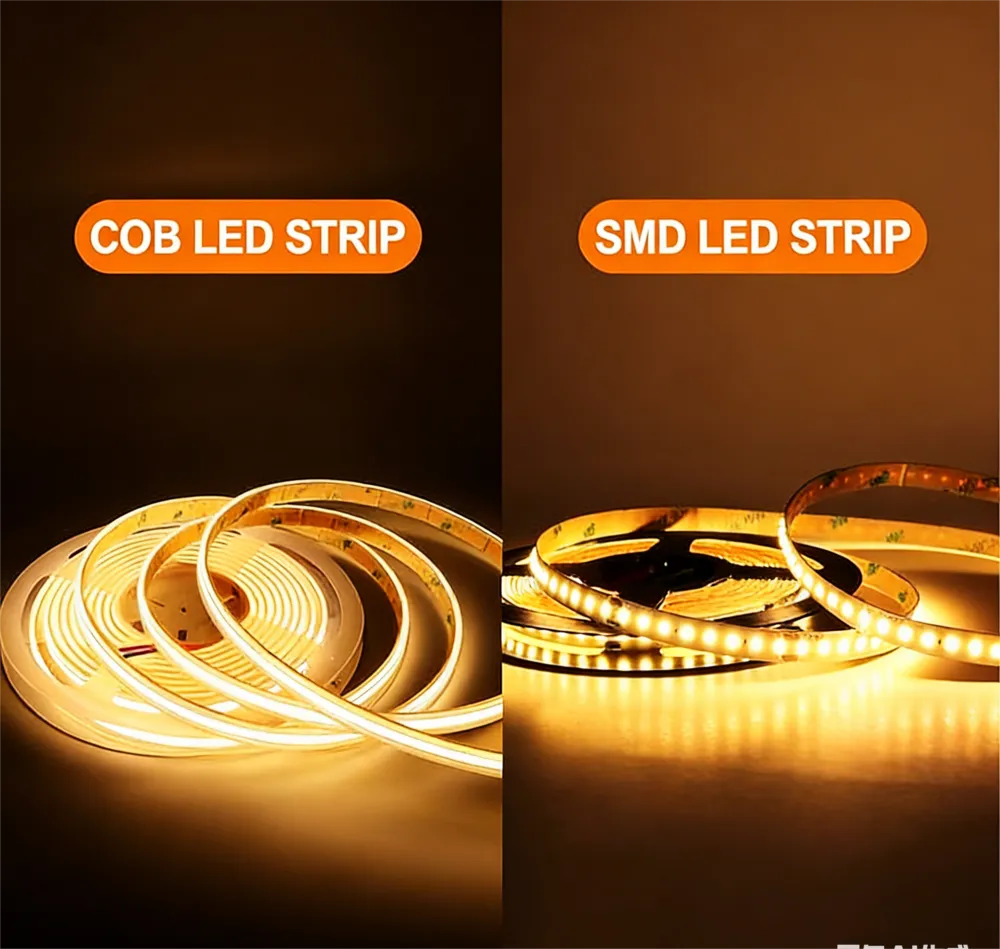
COB Strip: Provides a more uniform light output with no visible dots, making it ideal for applications requiring high-quality, seamless lighting, such as commercial displays, high-end residential lighting, and accent lighting.
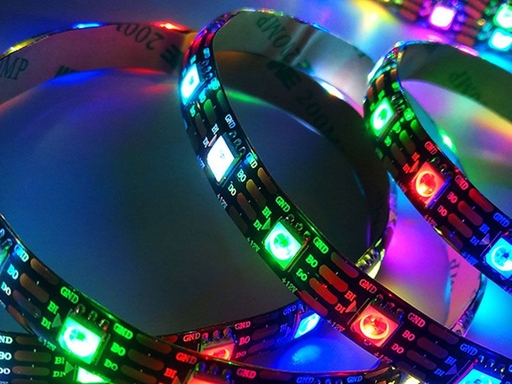
SMD Strip: Offers good brightness but may have visible dots, which can be a drawback in applications where uniformity is critical. However, it is suitable for general lighting, decorative purposes, and areas where slight imperfections are acceptable.
Brightness and Efficiency
COB Strip: Generally has higher luminous efficacy (lumens per watt) due to its advanced chip technology and better heat dissipation, making it more energy-efficient for high-brightness applications.
SMD Strip: Offers good brightness but may consume slightly more power for the same level of illumination compared to COB. It is still efficient for most applications but may not be the best choice for ultra-high-brightness needs.
Heat Dissipation and Lifespan
COB Strip: Excels in heat dissipation due to its integrated design, which helps in maintaining a lower operating temperature and extends the lifespan of the LEDs. This makes it suitable for applications requiring long-term reliability.
SMD Strip: While it has decent heat dissipation, it may not perform as well as COB in high-temperature environments or continuous operation. However, with proper design, it can still offer a long lifespan.
Flexibility and Installation
COB Strip: Typically less flexible due to its denser chip arrangement and may require more careful handling during installation. It is better suited for fixed installations where flexibility is not a primary concern.
SMD Strip: Highly flexible and easy to install, making it ideal for applications requiring curved surfaces, tight corners, or frequent repositioning.
Cost
COB Strip: Generally more expensive due to its advanced technology and higher manufacturing costs. However, the long-term benefits in terms of energy savings and reduced maintenance may justify the initial investment.
SMD Strip: More cost-effective and widely available, making it a popular choice for budget-conscious projects or applications where cost is a primary factor.
Comparison Chart
|
Factor |
COB Strip |
SMD Strip |
|
Light Quality |
Uniform, no visible dots |
Good brightness, may have visible dots |
|
Brightness |
High luminous efficacy |
Good brightness, slightly lower efficacy |
|
Heat Dissipation |
Excellent, longer lifespan |
Good, but may not match COB in high-temp |
|
Flexibility |
Less flexible, suitable for fixed installs |
Highly flexible, easy to install |
|
Cost |
Higher initial cost |
More cost-effective |
|
Applications |
High-end residential, commercial displays, accent lighting |
General lighting, decorative, flexible installations |
Recommendations for Distributors
For High-End Applications: Choose COB strip lights for projects requiring superior light quality, uniformity, and long-term reliability, such as luxury residential lighting, commercial displays, and architectural accent lighting.
For Budget-Conscious or Flexible Installations: Opt for SMD strip lights for projects where cost is a primary concern or where flexibility and ease of installation are important, such as general lighting, decorative purposes, and temporary installations.
Consider Long-Term Benefits: Evaluate the total cost of ownership, including energy savings, maintenance costs, and product lifespan, when making a decision. COB strip lights may offer better long-term value despite their higher initial cost.